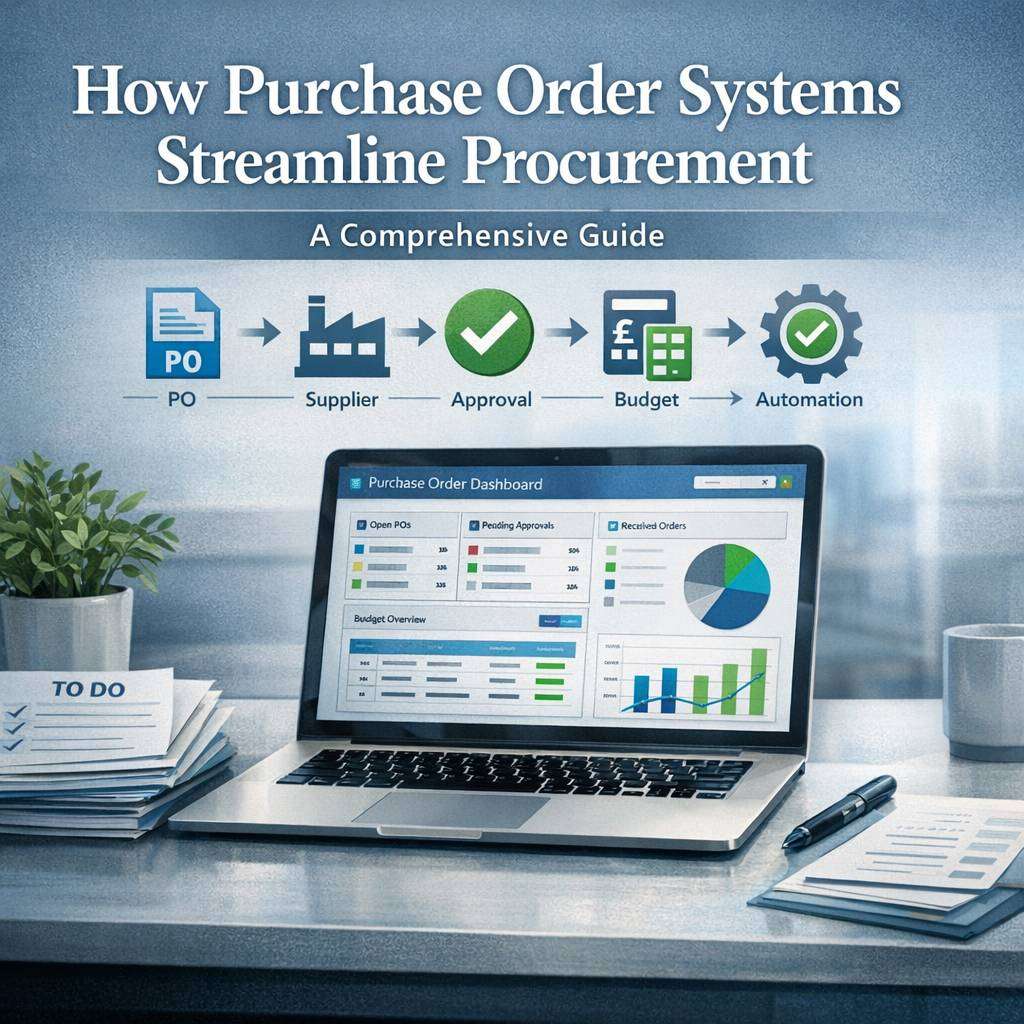
Effective procurement hinges on visibility, control, and efficiency. A robust purchase order (PO) process helps organisations manage supplier relationships, track spend, and ensure compliance with internal policies. In today’s digital landscape, many organisations turn to po software and cloud purchase order systems to automate routine tasks, reduce manual errors, and unlock data-driven insights. This guide explores how a purchase order system can transform procurement operations, from planning to reporting.
In this era of supply chain volatility and heightened governance requirements, investing in a modern purchase order management system is no longer optional. By adopting a purchase ordering system, businesses can standardise processes, improve supplier performance, and gain real-time control over commitments and cash flow. The goal is to replace ad hoc, paper-based practices with a cohesive, auditable workflow that supports strategic decision making.
What a purchase order system does for procurement
A purchase order system is more than a digitised form for approving orders. It orchestrates the entire lifecycle of a purchase, from initial requisition through to receipt, invoicing, and payment. Key capabilities typically include:
- PO creation and authorisation: approvers are routed automatically based on rules, ensuring that every order aligns with budgetary constraints and internal controls.
- Budget and spend controls: real-time visibility into committed versus available funds helps prevent overspend and supports procurement planning.
- Supplier management: centralised supplier data, contract terms, and performance metrics enable better supplier selection and ongoing evaluation.
- Compliance and auditability: a clear, traceable trail of approvals and changes supports regulatory requirements and internal governance.
- Integration with ERP and accounting: seamless data flows reduce manual reconciliation and improve financial accuracy.
- Reporting and analytics: dashboards and custom reports illuminate spending patterns, supplier risk, and procurement cycle times.
A well-implemented po system software also supports dynamic approvals, multi-currency transactions, and complex sourcing scenarios, making it suitable for large organisations and growing SMBs alike.
A robust purchase order systems workflow reduces delays, improves visibility, and strengthens internal controls across procurement. Centralized data helps track approvals, budgets, and supplier performance, while automation cuts manual errors. Implementing scalable purchase order systems supports compliance and reporting. For resources and guidance, visit the following link in the second half: https://www.osc.ny.gov/state-agencies/gfo/chapter-xia/xi-a3-purchase-orders.
Purchase order systems streamline supply chains by standardizing order entry, approval workflows, and tracking. They reduce errors, improve budgeting, and speed up vendor interactions. By maintaining centralized records, teams gain visibility into spend and cycle times. For a deeper dive, read more at the following link in the second half: https://payhawk.com/blog/purchase-orders-what-are-they-and-how-do-they-work.
Streamline procurement with reliable purchase order systems that minimize errors and speed approvals. Our solutions integrate seamlessly into existing workflows, boosting efficiency and cost control. For more information, visit https://cloudb2b.co.uk/.
Purchase order systems streamline procurement, boosting accuracy and visibility across teams. By centralizing requests, approvals, and tracking, they reduce delays and miscommunication. Implementing a robust system supports compliance and spend control. For more insight, explore this resource: https://fiscal.ca.gov/newsletter/fiscal-and-partner-launch-purchase-order-payment-history-search-tool/ Then consider integration, training, and ongoing optimization to maximize value.
How cloud purchase order system enhances procurement efficiency
Cloud-based PO systems offer specific advantages that traditional on‑premise tools often struggle to deliver. Organisations benefit from rapid deployment, scalable capacity, and continuous updates without the burden of in-house maintenance. Highlights include:
- Accessibility and collaboration: authorised stakeholders can access the system from anywhere, enabling faster approvals and improved collaboration across departments and geographies.
- Automatic workflow routing: purchase orders progress through predefined approval chains, with escalations for delays, ensuring timely procurement decisions.
- Real-time control and visibility: consolidated dashboards reveal PO status, budget burn, supplier lead times, and variance against forecast.
- Reduced manual data entry: intelligent parsing, PO templates, and supplier data imports minimise errors and accelerate processing.
- Security and compliance: cloud providers typically offer enterprise-grade security, role-based access, and data backups, helping organisations meet governance requirements.
- Cost control through analytics: spend analytics, supplier performance scores, and PO cycle time metrics empower data-driven procurement strategies.
A cloud purchase order system also scales with business growth, supporting higher transaction volumes, more complex supplier ecosystems, and global operations without a proportional rise in IT overhead.
Selecting the right purchase order system for your organisation
Choosing a suitable po software or purchase management solution involves assessing both capability and fit. Consider the following criteria:
- Core functionality: ensure the purchase order management system supports requisitions, PO creation, approvals, packing and receiving, invoicing, and three-way matching with invoices and receipts.
- Integration capabilities: verify compatibility with your ERP, financial systems, inventory management, and supplier databases. A good po system software will provide APIs and prebuilt connectors.
- Configuration and control: assess how easily you can tailor approval workflows, spend thresholds, multi-currency handling, and tax rules to reflect your governance model.
- User experience: intuitive interfaces reduce training time and encourage compliance; look for mobile-friendly design if field users or offsite teams must participate.
- Data quality and supplier enablement: ensure data cleansing, supplier onboarding workflows, and master data management are supported to maintain accurate records.
- Security and compliance: review data protection measures, audit trails, user permissions, and backup strategies aligned with your industry regulations.
- Total cost of ownership: beyond licencing, consider implementation, training, support, and ongoing maintenance when evaluating purchase orders software.
A purchase order system can be deployed as a cloud purchase order system to maximise these benefits, or integrated into an existing enterprise architecture. The choice between cloud or on‑premises often depends on security requirements, regulatory environments, and the desired speed of deployment.
Implementation tips for a smooth transition
- Start with a clear design of your purchase order control system: map existing processes, identify bottlenecks, and define success metrics such as PO cycle time, purchase order accuracy, and procurement spend under management.
- Pilot in a controlled environment: implement the system with a single department or category to validate workflows before scaling organisation-wide.
- Align with procurement policy: configure approvals, spend limits, and supplier compliance rules to reflect your organisation’s governance framework.
- Migrate data carefully: clean up legacy PO records, align supplier information, and validate mappings to ensure data integrity in the new system.
- Train stakeholders: provide role-based training and ongoing support to maximise adoption and reduce resistance.
- Establish governance and continuous improvement: set regular review cadences for supplier performance, contract compliance, and system utilisation to sustain benefits.
For organisations seeking to modernise procurement, a well-chosen po system software delivers tangible advantages: improved spend control, faster cycle times, heightened compliance, and better supplier relationships. Whether you opt for a cloud purchase order system or a hybrid approach, the objective remains the same—streamlining procurement with a reliable purchase order management system that aligns operational execution with strategic financial goals.
If you would like to explore specific features or need a comparative shortlist of cloud purchase order system providers, I can tailor recommendations to your sector, company size, and process maturity.
FAQ: Purchase Order Systems
What is a purchase order system?
A purchase order (PO) system is a software solution that automates the creation, approval, tracking, and management of purchase orders. It helps organisations purchase goods and services efficiently, with better visibility and control over spending.
What are the main benefits of using a PO system?
- Improved spend visibility and budget control
- Faster and more accurate order processing
- streamlined approvals and exception handling
- Reduced manual data entry and errors
- Better supplier collaboration and performance tracking
- Audit trails for compliance and reporting
How does a PO system differ from procurement software?
A PO system focuses specifically on the creation and management of purchase orders and related workflows. Procurement software is broader, often including sourcing, supplier management, contract management, spend analytics, and PO management as part of an integrated solution.
What features should I look for in a PO system?
- PO creation, editing, and versioning
- Automated approvals and routing rules
- Catalog and supplier management
- E-invoicing and AP integration
- Budget checks and spend controls
- Real-time order tracking and status updates
- Receiving and invoice matching (three-way match)
- Reporting and analytics
- Mobile access and user-friendly UI
- Security, roles, and audit trails
How does a PO system integrate with my existing ERP or accounting software?
Most PO systems offer integrations via APIs, connectors, or middleware. They typically synchronise PO data, receiving records, invoices, and payments with ERP/accounting modules to ensure data consistency and reduce duplicate entries.
What is a three-way match and why is it important?
A three-way match compares the purchase order, the receiving document, and the supplier invoice to ensure they align in quantity, price, and terms before payment. This reduces errors, prevents overpayments, and strengthens internal controls.
Can a PO system automate approvals?
Yes. PO systems can route requests according to predefined rules based on amount, department, project, or user role. They support escalations, notifications, and time-based reminders to keep purchases on track.
Is a PO system suitable for small businesses?
Absolutely. Many PO systems offer scalable plans or modular features that fit small businesses. They help control spending, improve supplier relations, and provide a foundation for growth.
What is the typical implementation timeline?
timelines vary by complexity, but a basic PO system can be piloted within weeks, with full deployment often happening over 1–3 months. Factors include data migration, integrations, user training, and change management.
How long does it take to ROI with a PO system?
ROI timelines depend on factors like transaction volume, error reduction, and process inefficiencies. Many organisations see payback within 6–12 months through faster processing, reduced approvals cycles, and better supplier terms.
What types of organisations benefit most from PO systems?
- Manufacturing and distribution companies
- Retail and e-commerce
- Professional services with formal procurement needs
- Healthcare and government entities with strict controls
- Any business seeking better spend visibility and compliance
What should I consider when selecting a PO system vendor?
- Ease of use and quick onboarding
- Seamless ERP/Accounting integrations
- Automation capabilities and rule configurability
- Data security, compliance, and audit features
- Total cost of ownership, including maintenance and support
- Customer reviews, reference cases, and vendor track record
- Scalability to support future needs
Is training required to use a PO system?
Yes. Training helps users understand PO workflows, approvals, and exceptions. Look for vendor-provided training, onboarding services, and accessible self-help resources.
How is data protected in a PO system?
Look for role-based access, encryption in transit and at rest, audit logs, and compliance with standards (e.g., GDPR, SOC 2). Regular backups and security updates are also important.
Can a PO system handle multi-currency or multi-location procurement?
Many PO systems support multi-currency and multi-location operations, enabling centralised controls with localised procurement activities.
What is the typical cost model for a PO system?
Costs are often subscription-based (per user or per month), with possible add-ons for features, integrations, or premium support. Some vendors offer perpetual licenses or usage-based pricing.
How do I evaluate the return on investment (ROI) for a PO system?
Estimate time saved per purchase, reduction in duplicate or erroneous orders, improved supplier terms, and gains from better visibility. Compare these benefits against total cost of ownership over 1–3 years.
Can a PO system help with supplier compliance and contract terms?
Yes. Some systems link POs to approved contracts, track supplier performance, enforce terms, and flag deviations for audit and compliance purposes.
What is the difference between a PO system and e-procurement?
A PO system is focused on purchase orders and related workflows. E-procurement typically encompasses the broader procurement process, including sourcing, supplier management, catalogs, and PO management.
If you’d like, I can tailor these FAQs to a specific product, industry, or organisational size.
Comments are closed