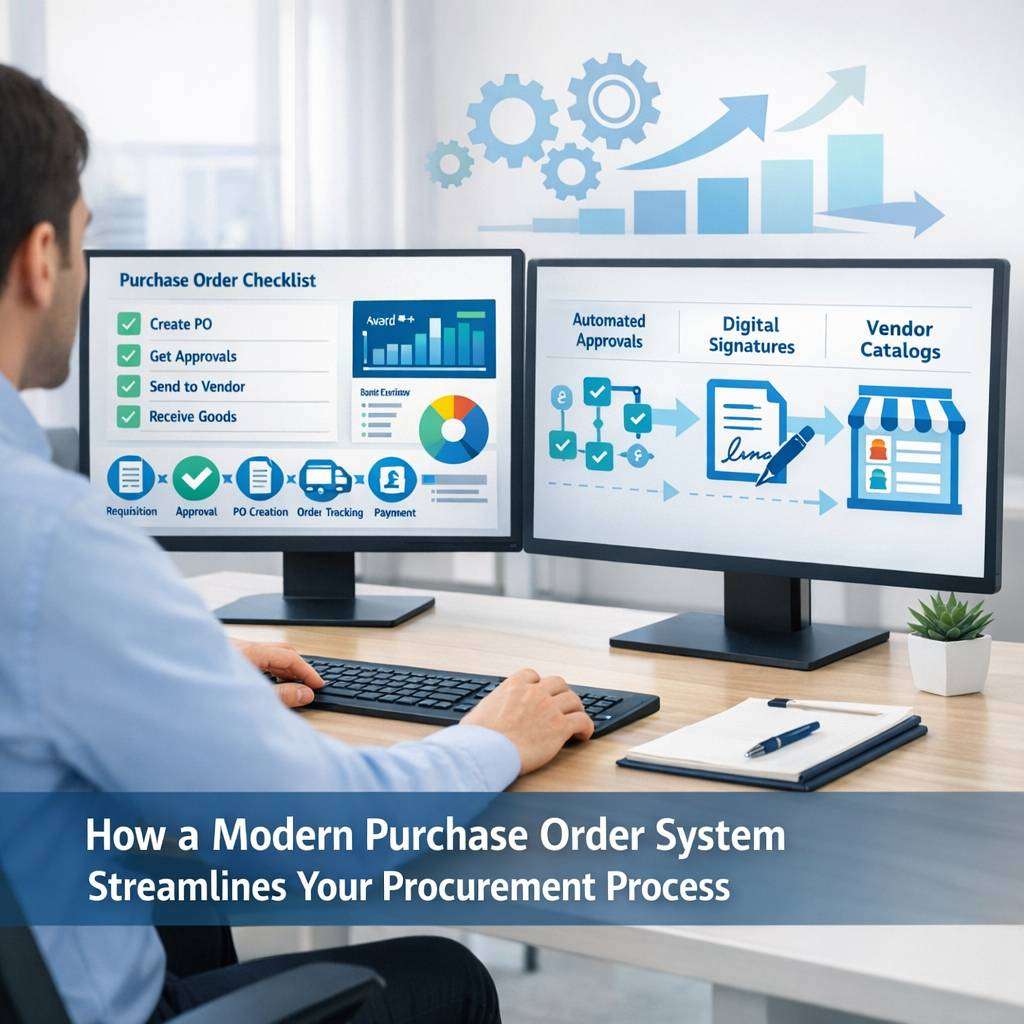
In today’s fast-moving business landscape, organisations require tools that not only handle routine tasks but also illuminate the path from requisition to payment. A modern purchase order system does exactly this by integrating purchasing processes, improving accuracy, and accelerating cycle times. This guest post explains how an electronic purchase order system and its accompanying po system software can transform procurement while keeping governance and spend under control.
FAQ: Purchase Order System
What is a purchase order system?
A purchase order system is software or a set of processes that helps organisations create, approve, track, and manage purchase orders (POs) from initial request through receipt of goods or services and payment. It streamlines procurement, improves spend visibility, and enforces controls.
What are the key features of a purchase order system?
- PO creation and templates
- approval workflows and routing
- supplier Management and catalogs
- real-time PO status tracking
- budget checking and encumbrance
- receipt and receiving
- invoicing and three-way matching
- audit trails and reporting
- integration with ERP/Accounting and inventory
- mobile access and notifications
How does a purchase order system differ from a procurement system?
A purchase order system focuses specifically on the lifecycle of purchase orders and their approvals, while a procurement system covers the broader end-to-end process including supplier discovery, sourcing, contract management, spend analysis, and procurement analytics. Some systems combine both, offering more comprehensive functionality.
What are the benefits of implementing a PO system?
- Reduced manual data entry and errors
- Faster PO creation and approvals
- Improved spend visibility and control
- Better supplier relationships through consistent processes
- Accurate budgeting and financial reconciliation
- Strong audit trails for compliance
Who should use a purchase order system?
- Purchasing and procurement teams
- Finance and accounts payable
- Department managers who request goods or services
- Suppliers who participate in PO-based workflows
- Small businesses seeking scalable procurement control and visibility
How does a PO system handle approvals?
Typically through configurable approval workflows that route POs based on criteria such as amount, department, vendor, or project. Approvers can approve, reject, or request changes, with notifications and automatic escalations for overdue items.
What is three-way matching and why is it important?
Three-way matching compares the PO, the receiving document (receipts), and the supplier invoice to ensure consistency before payment. It helps prevent overbilling, duplicate payments, and discrepancies, improving financial accuracy.
Can purchase order systems integrate with ERP or accounting software?
Yes. Most modern PO systems offer integrations with ERP, accounting, inventory management, and procurement platforms to ensure data consistency across systems, reduce manual reconciliation, and enable end-to-end process automation.
How do I choose the right purchase order system for my business?
- Assess your procurement volume, complexity, and multi-department needs
- Check ease of use and user adoption
- Review integration capabilities with your existing software
- Evaluate approval routing, automate rules, and compliance features
- Consider reporting, analytics, and KPI tracking
- Look for mobile access and supplier portal options
- Plan for scalability and security (roles, permissions, SSO, data protection)
What deployment options are available?
- Cloud (SaaS): quick setup, regular updates, and scalable pricing
- On-premises: full control and customisation (requires IT management)
- Hybrid: cloud-based core with on-premise integrations or dataChoosing depends on security, compliance requirements, and IT resources.
How long does it take to implement a PO system?
Timeline varies by scope, data migration needs, and integrations. A lightweight implementation might be a few weeks, while a full ERP-integrated deployment could take several months. A phased rollout reduces risk.
What metrics should I track with a PO system?
- Purchase order cycle time
- PO approval time and bottlenecks
- Spend under management and compliance rate
- supplier performance and lead times
- invoice accuracy and three-way match rate
- budget adherence and variance
- user adoption and process efficiency
Is training required for users?
Yes. Training helps users understand PO creation, approval workflows, receiving, invoicing, and reporting. Most vendors offer training materials, webinars, and ongoing support.
What security considerations are important?
- Role-based access control and least-privilege permissions
- Audit trails and activity logs
- Data encryption in transit and at rest
- Secure single sign-on (SSO) and vendor access controls
- Regular backups and disaster recovery plans
Can a PO system support multiple currencies and global vendors?
Many PO systems support multi-currency purchasing, exchange rate handling, and global supplier catalogs, which is essential for multinational organisations.
How do I handle PO changes or amendments?
Most systems support PO amendments or change orders, with versioning and approval requirements. Changes update linked receipts and invoices to maintain consistency.
What about compliance and audit readiness?
A good PO system provides documented workflows, approval histories, version control, and reporting to demonstrate governance and compliance with internal policies and external regulations.
How much does a purchase order system cost?
Costs vary based on deployment model, user count, features, and integration needs. Cloud subscriptions typically use per-user or per-PO pricing, with additional fees for premium modules or extensive customisation. Request quotes from vendors for an accurate estimate.
Do purchase order systems support supplier portals?
Yes. Supplier portals enable suppliers to receive POs, acknowledge receipts, submit invoices, and track status, which can improve accuracy and collaboration.
What is the typical implementation timeline for a PO system?
Implementation timelines depend on scope. A basic, stand-alone PO system may be implemented in weeks, while an end-to-end solution integrated with ERP and procurement modules can take several months with data migration and testing.
If you’d like, I can tailor these FAQs to a specific audience (e.g., small business, manufacturing, or enterprise) or adapt the tone for your website.
A reliable purchase order system can streamline procurement, boost accuracy, and cut processing times. With a robust solution, teams collaborate more effectively and track approvals seamlessly. For shoppers and suppliers alike, adopting a scalable purchase order system is essential. https://cloudb2b.co.uk/ Explore options and benefits today.
Why a purchase ordering system matters
A purchase ordering system is more than a digital ledger of orders. It acts as the backbone of procurement operations, connecting requisition, approval, ordering, receiving, and invoicing into a cohesive workflow. By standardising processes, a purchase ordering system reduces manual data entry, minimises errors, and enhances auditability. For organisations that manage multiple suppliers or operate across several locations, the benefits compound quickly: consistent purchase order data, clearer supplier performance insight, and stronger spend control.
A well-implemented po system software brings discipline to the procurement cycle. It ensures that every purchase follows defined business rules—budgets, approvals, and compliance checks—before an order is issued. Because these controls are embedded in the system, they are consistently applied, regardless of who initiates the purchase. In short, it shifts spend management from a reactionary process to a proactive discipline.
The key components of a modern po system
- Electronic purchase order system: The core of the solution is the ability to generate, transmit, and receive purchase orders electronically. This eliminates paper-based workflows and reduces cycle times. Integrated electronic POs improve supplier communication, reduce email back-and-forth, and provide real-time order status updates.
- PO system software: The software layer automates routing for approvals, enforces policy constraints, and embeds validation checks such as budget checks, supplier eligibility, and contract compliance. It also provides a single source of truth for all purchase orders, amendments, and artefacts.
- Purchase ordering system workflow: A well-designed workflow mirrors your organisation’s internal controls. Requisitions flow into purchase orders only after appropriate approvals, with alerts and escalations for overdue or exception requests. This ensures that purchasing remains aligned with strategic objectives and governance requirements.
- Purchase order control system: Control is about visibility and oversight. A robust PO control system tracks who created orders, who approved them, and which contracts govern the purchase. It also logs amendments and maintains version history, supporting audits and supplier negotiations.
- Po software UK readiness: For organisations operating in the United Kingdom, the system should support local regulatory requirements, VAT handling, and supplier onboarding processes that align with UK procurement practices. Look for localisation capabilities, robust reporting, and accessible support in the UK market.
How a modern purchase order system streamlines procurement
- Accelerated cycle times: By replacing manual and paper-based tasks with automated workflows, purchase orders move from requisition to supplier confirmation much faster. Real-time order status visibility reduces follow-up emails and phone calls, freeing procurement staff to focus on strategic sourcing.
- Improved accuracy and compliance: Validation rules catch common errors before orders are issued. Budget checks prevent overspending, contract enforcement ensures purchase conditions are met, and approvals are captured with auditable trails. The result is fewer discrepancies with suppliers and smoother month-end closes.
- Stronger supplier collaboration: Electronic POs and supplier portals give suppliers consistent information and predictable processing timelines. Suppliers can acknowledge orders, confirm delivery dates, and respond to changes without duplicating effort, improving on-time delivery and performance management.
- Enhanced spend visibility and control: Centralised data in the po system software enables spend analytics, supplier performance dashboards, and contract utilisation reporting. organisations can spot maverick buying, measure against budgets, and identify savings opportunities across categories.
- Risk management and governance: A modern PO system enforces policy by design. Approvers receive notifications when approvals are overdue, and exceptions are flagged for review. This reduces compliance risk and strengthens internal controls.
- Seamless integration with downstream processes: A well-integrated purchase ordering system connects to accounts payable, inventory management, and ERP solutions. Invoices, receipts, and returns align with purchase orders, ensuring accurate matching and streamlined financial workflows.
Selecting the right tool for your organisation
When evaluating po system options, consider these priorities:
- Usability and adoption: A clean user interface and intuitive navigation promote user adoption. If requisitioners and approvers can complete tasks with minimal training, the organisation benefits from faster time-to-value.
- Configurability and scalability: Your purchase ordering software should adapt to your evolving needs, including multi-branch operations, multiple currencies, contract-driven sourcing, and complex approval hierarchies.
- Compliance features: Look for built-in controls such as budget enforcement, deviation tracking, and audit-ready activity logs. UK-specific requirements, VAT handling, and supplier verification are essential for many organisations.
- Integration capabilities: The best systems publish robust APIs and pre-built connectors to ERP, accounting, and supplier networks. This reduces data silos and supports end-to-end processes.
- Vendor support and local expertise: In the UK market, access to responsive support, clear service levels, and domain knowledge can significantly influence implementation success.
Implementing a smooth transition
Transitioning to a modern purchase order system is a project that benefits from careful planning:
- Start with a clear objective: Define what “procurement excellence” means for your organisation—faster cycle times, reduced errors, or enhanced spend control.
- Map current processes: Document existing requisition-to-pay flows, approvals, and pain points. This helps identify where automation will deliver the most impact.
- Pilot and iterate: Run a controlled pilot with a single department or location to validate configurations, gather feedback, and refine workflows before a wider rollout.
- Train and empower: Provide role-based training focused on daily tasks. Encourage champions within teams to share tips and best practices.
- Measure success: Establish KPIs such as purchase order cycle time, percentage of electronic POs, compliance rates, and supplier lead times. Use these metrics to drive continuous improvement.
By embracing an electronic purchase order system and its associated po system software, organisations gain faster cycle times, tighter governance, and deeper insights into procurement performance. Whether you refer to it as a purchase ordering system, a purchase order software UK solution, or simply a po system, the outcome is the same: a streamlined, auditable, and strategic approach to purchasing that aligns with modern business demands.
Comments are closed